A wave of agricultural transformation is sweeping across Nandi County, thanks to a series of dynamic training sessions and field demonstrations supported under the Kenya Sustainable Potato Initiative (KSPI). Backed by the Nandi County Government and various development partners, the month of March saw both youth and farmers rallying around potato farming as a promising path to income generation and self-employment.
On March 12th, youth groups from Ollesso Ward, Mogon Village, gathered to discuss their role in the future of agriculture. The message was clear: potato farming offers a quick return on investment and a practical alternative to the long wait for formal employment. Through engaging sessions, the youth were introduced to Good Agricultural Practices (GAPs), climate-smart methods, and the Viazi Soko digital platform, which connects farmers to inputs, markets, and extension services. These digital tools, alongside training on climate resilience, are setting the stage for youth to not only improve their livelihoods but also to contribute significantly to the agricultural sector.

Youth training in Ollesso Ward
Meanwhile, farmers in Chepsangor, Tinderet Sub-county, showed keen interest in forming a group focused on potato farming, particularly targeting the Shangi and Unica varieties. A training session, held on March 14th, covered topics such as certified seed usage, smart farming techniques, and chemical safety. Through this training, farmers were introduced to the Viazi Soko platform, where they can access resources, purchase seeds, and connect with experts for ongoing support. This is part of a broader effort to encourage the adoption of modern farming practices that increase productivity and ensure sustainability in potato farming.

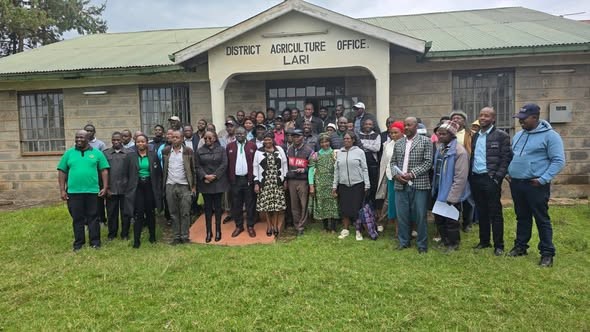
A section of the farmer field day in Aldai, Koyo/Ndurio Ward
In Kipkaren Ward on March 19th, a group of farmers, primarily engaged in poultry farming, were introduced to the idea of integrating potato farming into their existing agricultural activities. They learned how organic manure can be used to boost potato yields, and some expressed interest in using irrigation during the short rains to ensure consistent harvests. The training also covered the Viazi Soko platform, which helps farmers purchase inputs and manage their farming operations more efficiently.
On March 20th, extension officers visited a farmer in Kilibwoni Ward who was experimenting with mechanized seed potato production. This farmer, who currently grows three acres of Shangi basic seeds and plans to expand, is setting a benchmark for local seed production and mechanization in Nandi County. His goal is to scale up production and diversify into other potato varieties, contributing to the county’s growing seed supply while maintaining high farming standards.

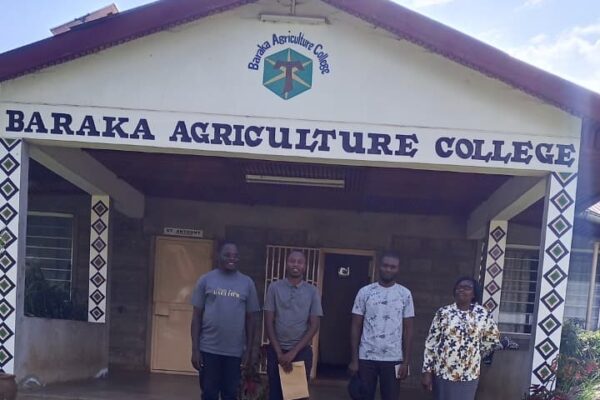
VBA’s Training in Chepkunyuk Ward, Nandi Hills
Two impactful field days marked the end of the month. On March 21st, a mini field day was held in Cheptungeny Village, attracting over 120 farmers. Participants engaged with agribusiness partners such as Fanisi Fertilizer, Twiga Chemicals, Syngenta, and county officials. The event covered topics such as organic farming, intercropping, and climate-smart agriculture, while showcasing the Viazi Soko digital platform as a tool for accessing farm inputs, extension services, and contract farming opportunities. This demonstration illustrated how digital tools can significantly enhance farming operations and connect farmers to critical resources.
A second field day, focused on harvesting ware potatoes, took place on March 27th in Kapsaos Village, Aldai Sub-county, where over 100 farmers participated. This practical demonstration included sorting potatoes by quality, estimating yields, and understanding the market requirements for contract farming. Stakeholders from Egerton University, Twiga Chemicals, and the county government also attended, reinforcing the importance of certified seeds, contract farming, and digital tools for market access.
These activities highlight a growing movement in Nandi County, one that blends traditional farming knowledge with modern innovation. Through the Kenya Sustainable Potato Initiative (KSPI), farmers and youth are gaining the skills, tools, and knowledge needed to transform the potato sector. The initiative is not only driving economic opportunities but also enhancing climate resilience, encouraging digital agriculture, and supporting youth-led agribusiness ventures. As the rains arrive and planting begins, Nandi’s farmers and youth are more prepared than ever not just to grow potatoes, but to grow a better, more sustainable future.