

Potato (Solanum tuberosum L) is among Kenya’s most important food and cash crops. Ranked second only to maize, it plays a vital role in food and nutrition security, poverty reduction, and employment creation. With increasing urbanization, population growth, and shifting consumer preferences toward value-added products like chips and crisps, demand for potatoes continues to rise. To meet this demand sustainably National Potato Council of Kenya, through KSPI Project funded by AGRA has been training farmers on essence of effective potato planting and management practices.
Importance of Soil Health
Successful potato production begins with healthy soil. Farmers are encouraged to test their soils before planting to determine the appropriate fertilizer type for both planting and top-dressing. Ideally, potatoes grow best in soils with a pH of 5.0–7.0, with 5.5 being optimal. The soil should be deep, light, loose, well-drained, and retain moisture effectively. It must also be free from pests and diseases such as bacterial wilt, nematodes, and blight. Notably, late blight, a major challenge in potato farming, only affects living hosts, emphasizing the importance of crop rotation and proper field hygiene.
Seed Selection
High-quality seed is crucial for achieving high potato yields. Certified seed potatoes are recommended because they are disease-free and have strong genetic potential. Farmers should select well-sprouted seeds with at least four sprouts per tuber to ensure quick emergence and healthy plant growth. The more sprouts a seed has, the higher the potential tuber yield. Using uncertified or poorly sprouted seed often results in low yields and increased susceptibility to pests and diseases. Farmers can access the seed through the Viazi Soko digital platform.
Planting Techniques
Proper planting methods create an optimal environment for crop development. Farmers should plant seed tubers just below the soil surface and mound them with about 15 cm of soil. The sprouts should face upward to promote quick emergence. Recommended spacing is 30 cm between plants and 75 cm between rows. The seeding rate ranges from 800 kg/acre for smaller seed tubers (size 1) to 1,000 kg/acre for larger ones (size 2).
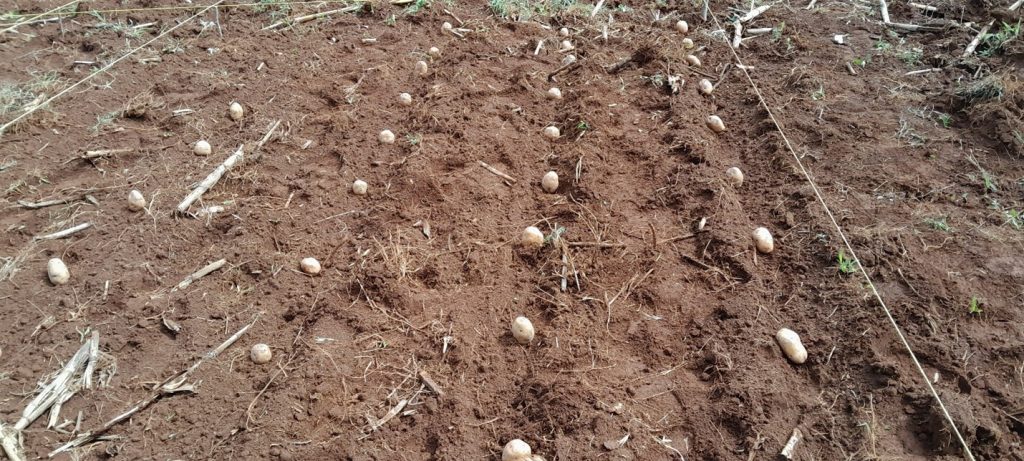
Surface planting
Service planting is highly recommended; however, for furrow planting, the furrows should be prepared after harrowing, with planting depths between 8 and 12 cm. Farmers must also ensure the soil is well-drained to prevent waterlogging, which can negatively impact tuber development and increase disease risk.
Crop Protection
Potatoes are vulnerable to various pests, weeds, and diseases. To protect the crop, farmers should develop and follow a spray program. Chemical sprays should be applied every two weeks to control fungi, insects, and other threats. Strict adherence to the spray schedule is essential to prevent losses, especially from destructive diseases like blight.
Conclusion
Potato farming offers significant potential to improve livelihoods and strengthen Kenya’s food systems. However, realizing this potential requires adopting best practices in soil management, seed selection, planting, and crop protection. Certified seeds, timely spraying, and proper planting techniques are not just recommendations—they are the foundation of sustainable productivity.
With proper planting and management, Kenya’s potato farmers can not only meet the growing demand but also increase incomes and contribute to national food security.




Comment(1)
Brian says:
September 10, 2025 at 2:40 PMI like it,it provides necessary knowledge and skills to rural farmers. I’m strongly interested