 This month’s newsletter arrives at a genuinely exciting moment for Kenya’s potato sector. The countdown to the World Potato Congress 2026 is well and truly underway, with Kenya Airways now confirmed as the Official Airline Partner, we are beginning to see a national coalition take shape around what promises to be a landmark event for Kenyan agriculture on the world stage.
At the same time, it would be easy to get swept up in the global pageantry and lose sight of the work happening quietly on the ground. This issue brings both into focus. The confirmation of Kenya Airways as WPC2026’s airline partner is significant not merely as a logistical arrangement; it is a signal that major national institutions are beginning to align behind the potato sector’s story which is rooted in the 240,000 hectares of farmland tended daily by millions of Kenyan families.
The story of Viazisoko is perhaps the most instructive in this edition. Research now confirms what many extension officers have long suspected: farmers who are merely aware of digital platforms, not even active users, show measurably higher productivity. This is a remarkable finding. It suggests that information access, even at its most indirect, transforms decision-making. The implication for policy is clear: the greatest returns in this sector may come not from expensive infrastructure alone, but from sustained investment in farmer training and awareness campaigns.
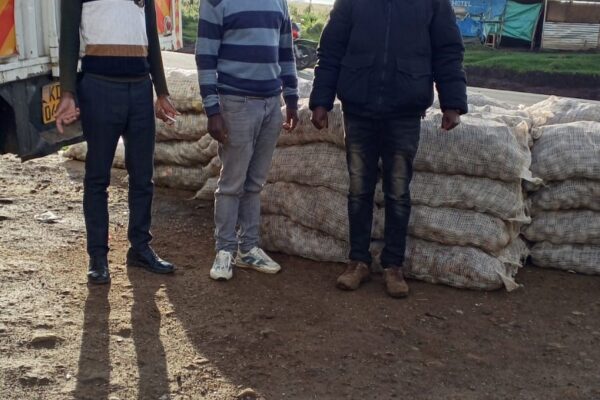
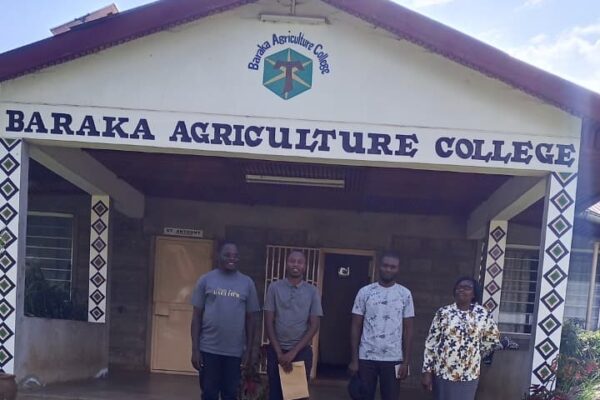
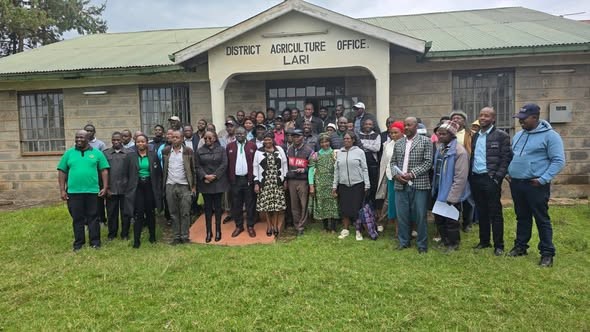
That message is given practical shape by two field stories this month. On 11 February, NPCK and Viazi Kings visited Techfarm Seed Unit and Baraka Agriculture College in Molo to explore certified seed listings on the Viazisoko platform and participation in county demo farms. Days later, the long rains arrived — and so did the seeds. The countrywide distribution of certified potato seeds purchased through Viazisoko, launched on 20 February, is among the most tangible proofs yet that digital platforms can do more than inform: they can deliver.
We also recognise the indispensable role of women in this edition. With 2026 declared the International Year of the Woman Farmer, it is worth pausing to reflect that 60 to 80 percent of Kenya’s agricultural workforce is female, a figure that demands more than ceremonial acknowledgement. Women like Florence Malemba, working at the intersection of research, extension, and community trust, are not exceptional cases. They are representative of a generation of women professionals quietly transforming the sector from within.
To our partners, farmers, researchers, and supporters, thank you for making February a month of momentum. The months ahead will ask more of all of us. We are confident the sector is ready.