As global food systems face growing pressure to become more equitable, sustainable, and resilient, inclusive agribusiness has emerged as a powerful approach for transforming agricultural value chains. Inclusive agribusiness models aim to integrate smallholder farmers, women, youth, and low-income consumers—often referred to as Base of the Pyramid (BoP) actors—into commercially viable market systems. These models go beyond profitability to address systemic inequalities by promoting social inclusion, shared value, and long-term development. The 2SCALE (Toward Sustainable Clusters in Agribusiness through Learning in Entrepreneurship) program, one of Africa’s largest agribusiness incubators, has been at the forefront of designing and scaling such inclusive models across the continent.
Against this backdrop, the 2SCALE Knowledge Exchange Workshop, held from May 16th to 20th, 2025, brought together partners, practitioners, and development actors for an intensive week of learning, reflection, and strategy building under the theme #InclusiveFoodSystem. The workshop served as a platform to exchange experiences, deepen practical understanding of inclusive agribusiness, and strengthen capacities for implementing 2SCALE’s proven approach.
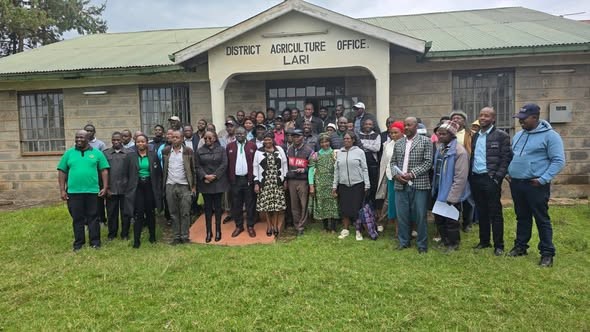
The event kicked off with a field visit to Kieni West, Nyeri County, where participants engaged directly with actors along the dairy value chain who have benefitted from 2SCALE’s capacity-building interventions. The delegation visited a progressive dairy farmer in Watuka, Watuka Cooperative, and Kieni Dairy Products Limited (KPDL)—a model enterprise involved in milk chilling and pasteurisation. KPDL supplies both processors and BoP consumers through seven outlet shops in Nyeri and Nairobi. These visits offered tangible illustrations of how inclusive agribusiness models can simultaneously support commercial growth and improve livelihoods for small-scale producers and low-income consumers.
The second and third days transitioned into in-house sessions, structured into interactive modules covering the fundamentals of the 2SCALE approach. Key topics included the two pillars of inclusive agribusiness commercial viability and social inclusion—as well as strategies for establishing and managing Agribusiness Partnerships (APPs). Participants examined thematic areas such as gender inclusion, youth engagement, nutrition sensitivity, and sustainability. Tools and frameworks were shared for conducting value chain diagnostics, designing partnership interventions, and applying adaptive management practices in dynamic market contexts.

| Participant of the 2scale knowledge exchange forum pose at one of the KDPL Milk shop outlet |
Further sessions explored the governance of partnerships, the role of business support service providers, and how to facilitate partnerships from inception through maturity to phase-out. The workshop encouraged reflection on how to assess partnership effectiveness and ensure long-term impact, particularly through local ownership and market-driven solutions.
Overall, the 2SCALE Knowledge Exchange Workshop reaffirmed the program’s commitment to co-creating inclusive, scalable, and commercially sound agribusiness models that uplift vulnerable actors in the food system. Participants left the workshop equipped with actionable tools and renewed energy to drive forward the inclusive agribusiness agenda—demonstrating that profitability and equity can go hand in hand in Africa’s agricultural transformation.