In a country where agriculture forms the backbone of the economy, the role of seed inspectors is crucial. Seed inspectors are the frontline defenders of seed quality, ensuring that only high-quality, clean, and genetically pure seeds reach farmers. Their role is vital in upholding food security, protecting farmer investments, and maintaining national and international seed standards.

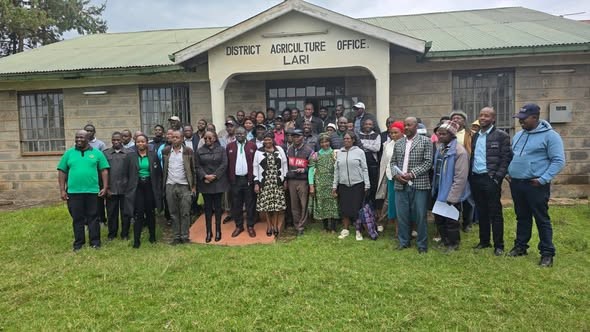
KEPHIS Team and the Private Inspector trainees at KEPHIS Head Quarters
The primary objective of seed inspector training is to equip participants with the knowledge, practical skills, and regulatory understanding required to inspect, evaluate, and certify seed crops and seed lots. The training ensures that inspectors can:
- Identify and report seed crop non-conformities.
- Detect seed-borne diseases and pests (e.g., Bacterial Wilt and PCN in potatoes).
- Verify the genetic purity and physical quality of seeds.
- Enforce compliance with national seed regulations and international protocols.
Seed inspector training in Kenya is conducted under the guidance of:
- KEPHIS (Kenya Plant Health Inspectorate Service)– the main regulatory body.
- Seed and Plant Varieties Act (Cap 326)– the legal foundation governing seed certification.
- International Standards– such as ISTA (International Seed Testing Association) and UPOV (International Union for the Protection of New Varieties of Plants), where applicable.
Training programs are designed to be both theoretical and practical, covering a wide range of modules:
- Legal and Institutional Knowledge
- Understanding the Seed and Plant Varieties Act.
- Roles of KEPHIS and other stakeholders in seed regulation.
- Principles of seed certification and traceability.
- Crop Inspection Procedures
- Field Inspection: Timing, frequency, and methodology of inspecting seed crops (especially critical for crops like potato).
- Post-Harvest Inspection: Sampling of seed lots, assessment of diseases, and evaluating storage practices.
- Use of descriptors to confirm true-to-typecharacteristics and identify off-types.

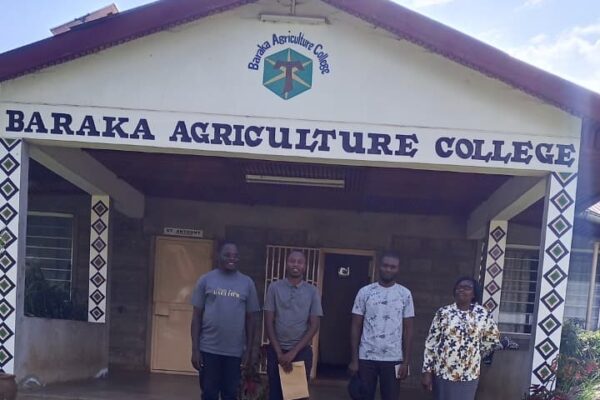
Inspector trainees during practical training on crop inspection.
- Disease and Pest Detection
- Identification of key potato seed threats like Bacterial Wilt (Ralstonia solanacearum)and Potato Cyst Nematode (PCN).
- Zero-tolerance protocols for regulated quarantine pests.
- Knowledge of transmission vectors (e.g., aphids for viruses).
- Sampling and Laboratory Coordination
- Determining the correct sample sizebased on lot weight (e.g., 50000kg potato seed = ~80 samples from 1600 x 50kg bags).
- Proper sampling techniques to ensure representativeness.
- Chain-of-custody protocols for lab testing.

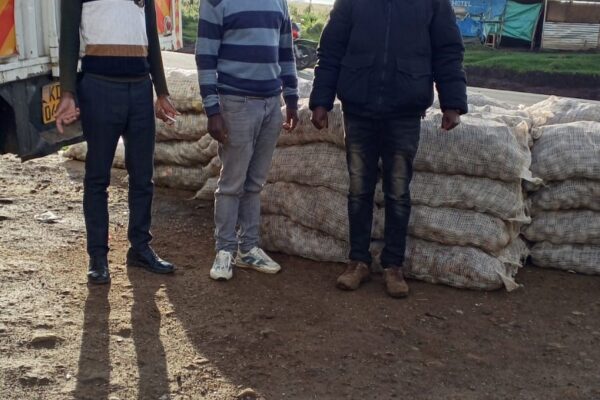
Lot sampling at processing area, before giving a verdict.
- Documentation and Record Keeping
- Verification of source documents (seed source, crop registration, previous inspection reports).
- Proper labeling and traceability (lot number, variety, class, grower info, etc.).
- Writing detailed and unbiased inspection reports.
Through the training the inspector is supposed to acquire qualities and maintain integrity through the training and while working as an inspector. The integrity will support the professionalism through;
- Objectivity & Integrity: Reporting findings honestly, regardless of pressure.
- Attention to Detail: Noticing subtle signs of off-types, pest presence, or poor storage conditions.
- Knowledge of Agronomy: Understanding crop physiology to better evaluate seed condition.
- Professionalism: Respectful communication with farmers, seed producers, and labs.
Upon successful completion of the training and practical evaluations:
- Trainees are certified as Authorized Seed Inspectorsby KEPHIS.
- Certification allows them to operate independently or under institutions, inspecting, approving, or rejecting seed for certification.
While the training of seed inspector aims at reducing the cost of inspection fee which is incurred by the seed producers, with the main aim being making the certified seeds more affordable to farmers, the overall Seed inspector training is a cornerstone in the journey toward agricultural excellence. In a time when the quality of inputs directly determines the productivity and resilience of food systems, trained inspectors are more than just regulators—they are champions of integrity, science, and sustainability in Kenyan agriculture.