 By Stephen Mungai,
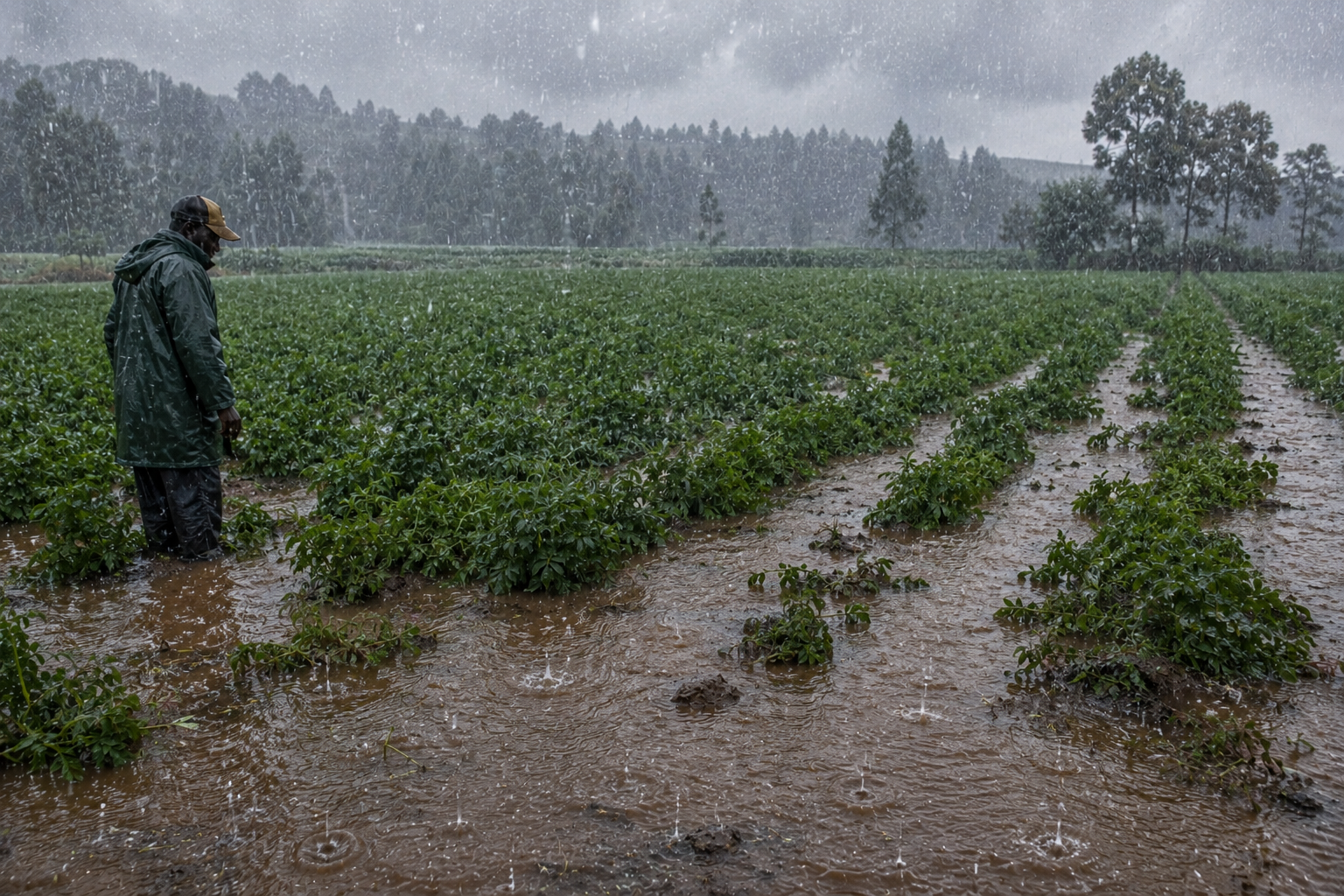
Potato farming is highly dependent on weather conditions. While adequate rainfall is essential for good crop establishment and tuber development, excessive rainfall can quickly turn into a major threat to production. Current seasonal forecasts from global climate agencies and the Kenya Meteorological Department indicate an increased likelihood of above-normal rainfall during the September–December season, with the possibility of El Niño conditions developing. Such conditions have historically been associated with prolonged rainfall, flooding, waterlogging, increased disease pressure, and challenges in accessing farms.
For potato farmers, preparation should begin well before the rains start. The difference between a successful harvest and significant losses often depends on the actions taken today. At NPCK Viazi Soko, we encourage all potato growers to embrace climate-smart farming practices that reduce risk and improve resilience during periods of excessive rainfall.
Why Early Preparation Matters
Heavy and prolonged rainfall affects potato production in several ways. Saturated soils limit oxygen availability around the roots, slowing plant growth and reducing tuber development. Waterlogged conditions encourage tuber rotting and create an ideal environment for fungal and bacterial diseases. Continuous rainfall also delays essential farm operations such as weeding, spraying, fertilizer application, and harvesting.
Beyond production losses, excessive moisture reduces tuber quality, increases post-harvest losses, and limits market opportunities. Farmers who prepare early are therefore better positioned to protect both their yields and their income.
Ensure proper field drainage.
Good drainage is the first line of defense against excessive rainfall. Before the onset of the rainy season, farmers should inspect their fields and ensure that drainage systems are fully functional.
Practical measures include:
- Clear all blocked drainage channels and remove debris that may obstruct water flow.
- Construct drainage ditches around potato fields to safely direct excess water away from the crop.
- Plant potatoes on well-formed ridges or raised beds to improve drainage and prevent tubers from sitting in stagnant water.
- Avoid planting potatoes in low-lying or flood-prone areas unless adequate drainage systems have been established.
- Regularly inspect drainage channels throughout the rainy season and repair any sections damaged by runoff.
Remember, potatoes do not tolerate standing water. Even a few days of waterlogging can significantly reduce yields and increase disease incidence.
Prepare for Increased Disease Pressure
One of the biggest challenges during El Niño seasons is the rapid spread of potato diseases. Warm temperatures combined with prolonged leaf wetness provide ideal conditions for devastating diseases such as Late Blight, Bacterial Soft Rot, Blackleg, and Pink Rot.
Farmers are advised to adopt preventive rather than reactive disease management.
Key recommendations include:
- Begin scouting fields immediately after crop emergence and continue at least twice every week.
- Apply recommended preventive fungicides before disease symptoms become severe, especially when continuous rainfall is forecast.
- Rotate fungicides with different active ingredients to prevent the development of resistance.
- Remove and safely destroy infected plants to reduce disease spread.
- Clean farm tools and equipment after working in infected fields.
- Avoid moving through potato fields when plants are wet, as this can spread diseases from one plant to another.
Early detection and timely intervention remain the most effective methods of disease control.
Strengthen Crop Nutrition
Healthy crops are naturally more resilient to weather stress and disease attacks.
Farmers should:
- Conduct soil testing where possible to guide fertilizer application.
- Apply balanced fertilizers according to crop requirements.
- Avoid excessive nitrogen application, which encourages lush foliage that remains wet for longer periods and increases disease risk.
- Incorporate well-decomposed organic manure to improve soil structure, increase water infiltration, and enhance root development.
Balanced nutrition contributes to stronger plants capable of withstanding adverse weather conditions.
Plant Certified Seed Only
The foundation of a healthy potato crop begins with quality seed.
Certified seed potatoes offer numerous advantages, including:
- Reduced risk of introducing seed-borne diseases.
- Better crop establishment and uniform growth.
- Higher yields.
- Improved resistance to common production challenges.
Farmers are encouraged to source certified seed from accredited suppliers and make use of the Viazi Soko platform to identify genuine seed suppliers and access reliable market information.
Maintain Good Field Hygiene
Field sanitation plays an important role in reducing disease outbreaks during wet conditions.
Farmers should:
- Remove volunteer potato plants that may harbor diseases.
- Control weeds to improve air circulation within the crop canopy.
- Destroy infected crop residues after harvest.
- Avoid leaving harvested tubers exposed in wet fields.
Clean fields dry faster after rainfall, reducing the period during which diseases can infect potato plants.
Monitor Weather Updates Regularly
Weather information is now one of the most valuable farm management tools.
Farmers are encouraged to:
- Follow seasonal forecasts issued by the Kenya Meteorological Department.
- Consult County Agriculture Officers and extension staff for localized advisories.
- Stay connected to NPCK Viazi Soko communication platforms for production tips and timely updates.
- Adjust planting dates, spraying schedules, fertilizer applications, and harvesting plans based on weather forecasts.
Making decisions based on reliable weather information reduces unnecessary losses and improves farm efficiency.
During the El Niño Period
Once the rains begin, farmers should remain vigilant.
Regularly inspect potato fields after every heavy rainfall to identify blocked drainage channels, areas of standing water, disease outbreaks, nutrient deficiencies, or pest infestations. Drain excess water immediately wherever possible.
Harvest mature crops without unnecessary delays. Leaving mature potatoes in saturated soils increases tuber rotting, reduces storage life, and lowers market value.
Where roads become impassable, farmers should work closely with buyers, cooperatives, and aggregation centers to organize timely marketing before conditions deteriorate further.
Prepare early. Monitor your fields regularly. Protect your crop. Safeguard your harvest. Together, we can build a resilient and profitable potato sector despite changing climatic conditions.