The National Potato Council of Kenya (NPCK), through the Kenya Sustainable Potato Initiative (KSPI), continues to demonstrate its central role in advancing sustainable potato production across Kenya through strategic, field-based farmer engagements. In March 2026, NPCK convened farmers and stakeholders in Nyandarua and Meru counties under the KSPI framework, an initiative supported by AGRA, to strengthen farmer capacity, enhance productivity, and promote climate-smart agricultural practices within the potato value chain.
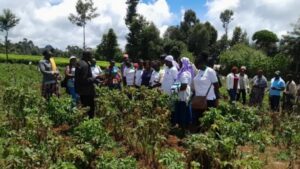
The first engagement, held on 20th March at Nehema Agrovet in Nyandarua County, brought together farmers for a two-day interactive field day focused on practical learning and peer exchange. NPCK, working alongside Egerton University, led sessions centered on sustainable potato production systems, improved agronomic practices, and the importance of accessing quality inputs. Farmers were guided on adopting climate-smart techniques and improving farm management, with a strong emphasis on translating research into actionable, on-farm solutions. The training reinforced the need for resilient farming approaches while strengthening linkages between farmers, extension services, and research institutions.
Building on this momentum, a second field day was successfully hosted on 26th March in Kiamigogo, Abogeeta Ward, Meru County. Organized under the AGRA-supported KSPI project, the event focused on equipping farmers with practical tools to improve both productivity and market access. Key training areas included Good Agricultural Practices (GAPs), contract farming, climate-smart agriculture, and the use of certified seed. A notable highlight was the promotion of rooted apical cuttings technology, positioned as a critical innovation for improving seed quality and boosting yields. Farmers were also introduced to the Viazi Soko digital platform, reinforcing the role of technology in enhancing transparency and efficiency within the potato market system.
The Meru engagement further underscored the importance of multi-stakeholder collaboration, bringing together partners such as the County Government of Meru, Egerton University, Rukaria Farm, OCP, and SMS. These actors contributed technical expertise, demonstrations, and extension support, strengthening the ecosystem around potato production. Across both counties, the KSPI initiative continues to bridge critical gaps between research, extension, and farmers—ensuring knowledge is not only shared but effectively applied. Collectively, these field days reflect a coordinated effort by NPCK and its partners to drive sustainable transformation in Kenya’s potato sector, improving farmer livelihoods through productivity gains, stronger market linkages, and resilient agricultural systems.