On 7th and 8th May 2026, stakeholders in Kenya’s potato sector gathered in Molo, Nakuru County, for a two-day learning and exchange forum convened by FIPS-Africa. The meeting brought together key players in the potato value chain, including the Kenya Agricultural and Livestock Research Organization (KALRO), Egerton University, the County Government of Nakuru, Farm Africa, AGRA as a development partner, and the National Potato Council of Kenya (NPCK), represented by CEO Mr. Wachira and Dr. Dinah Borus.
The forum created a platform for reflection on the evolving potato seed systems in Kenya and the role of innovation in improving farmer access to quality planting material. On the first day, participants convened at Generis Hotel in Molo for a networking and learning session where partners shared their historical, ongoing, and future contributions to strengthening the potato value chain. NPCK was among the institutions that highlighted its mandate and role in advancing the potato value chain in Kenya, particularly in coordination, policy support, and sector development.
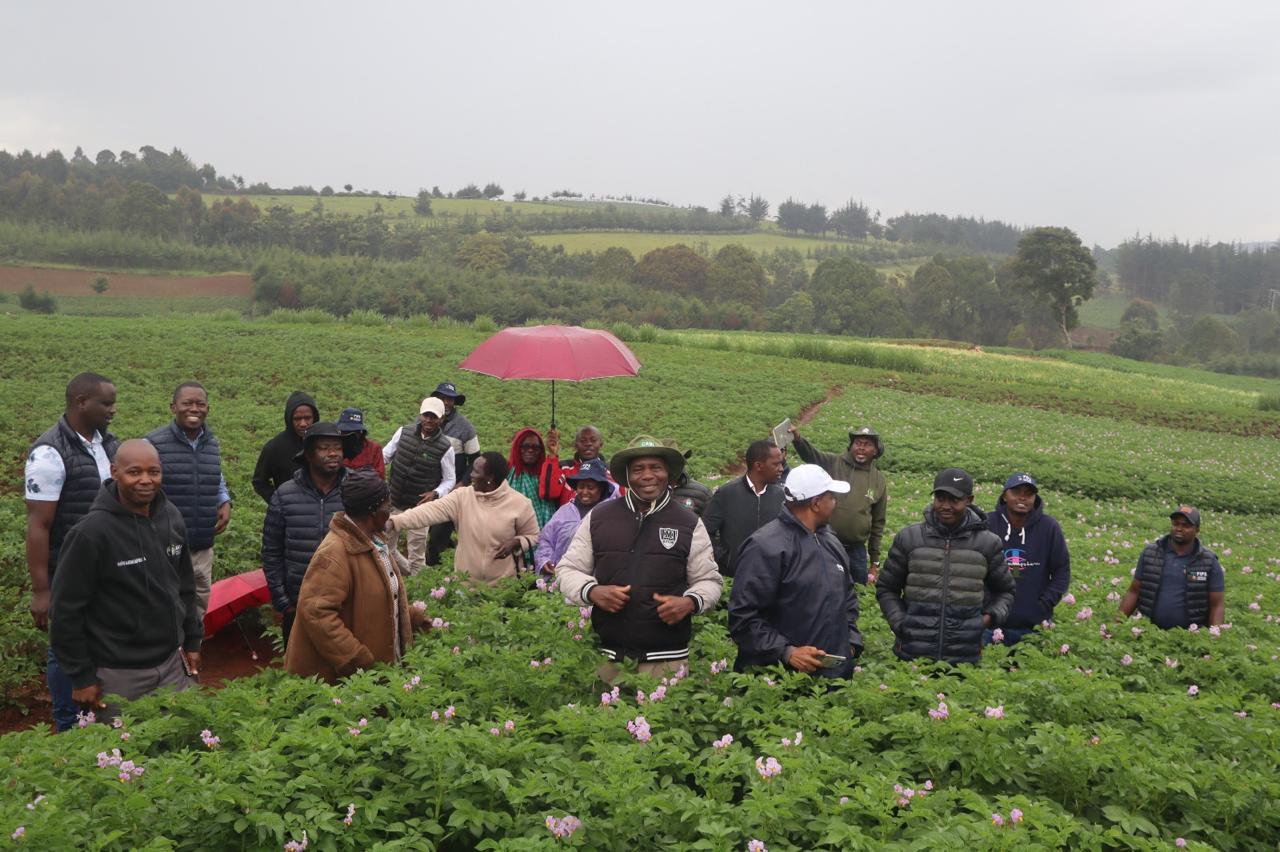
The second day of the engagement shifted focus from discussion to demonstration, as participants embarked on a field visit designed to showcase the practical impact of Rooted Apical Cuttings (RACs), also referred to by FIPS-Africa as Planting Rooted Apical Cuttings (PRACs). The field experience illustrated how RACs are increasingly being used as an effective starter material for improving access to clean, high-quality seed potatoes among smallholder farmers.
FIPS-Africa has over the years championed the use of RACs, initially piloted in Meru County and now widely scaled in Nakuru County. Through its Village-Based Advisor (VBA) model, the organization has distributed over two million RACs valued at more than KES 20 million to farmers in Nakuru alone. The approach is anchored on farmer training and the provision of small starter packs of quality seed or RACs, allowing farmers to directly observe the performance benefits of clean seed and gradually transition into sustained adoption.
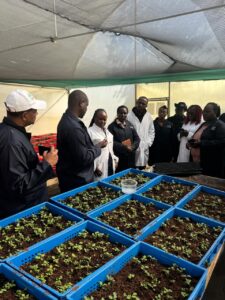
The delegation visited the RAC production unit located in Keringet Ward, Kuresoi North Sub-County, where FIPS-Africa operates two screenhouses dedicated to RAC multiplication. The facility has a combined capacity of producing up to one million RACs annually. According to Mr. James Ngugi of FIPS-Africa, demand for RACs continues to rise steadily, a trend that has necessitated the expansion of production infrastructure, including the construction of a second screenhouse to meet growing farmer demand.
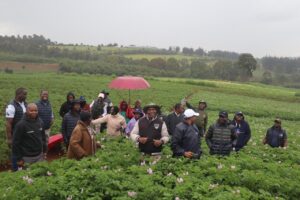
Beyond production, the field visit extended to decentralized seed multiplication sites managed by farmer-based Village-Based Advisors (VBAs). Among those visited were Mr. Richard Cheruiyot and Ms. Mary, popularly known as Mama Balozi, both of whom shared compelling testimonies on how RAC-based seed systems have transformed their agribusiness enterprises. They narrated how initial exposure through small-pack seed distribution evolved into successful seed potato businesses, enabling them to reach more farmers with quality seed and progressively transition into direct procurement and multiplication of RACs and certified seed.
Their experiences underscored the strength of the VBA model in building grassroots seed systems that are not only commercially viable but also socially inclusive. By decentralizing access to quality seed and embedding it within local enterprise structures, FIPS-Africa’s approach continues to demonstrate a scalable pathway for improving seed potato availability and strengthening food security at the community level.
The forum concluded with a shared recognition among stakeholders that innovations such as RACs are playing a critical role in bridging the seed gap in Kenya’s potato sector. The integration of research institutions, development partners, county governments, and farmer-led enterprises reflects a growing consensus that sustainable transformation of the potato value chain depends on collaboration, innovation, and farmer-centered delivery models.