Digital technology is increasingly reshaping Kenya’s agricultural sector, giving farmers faster access to information, services, and markets. Within the potato value chain, one of the most impactful innovations has been Viazisoko, a digital platform developed by the National Potato Council of Kenya in collaboration with sector partners to support smallholder farmers.
Potatoes remain Kenya’s second most important staple crop after maize, contributing significantly to food security, employment, and rural incomes. The potato value chain supports more than 3.5 million actors and contributes over KSh 50 billion annually to the economy. Despite this importance, the sector has historically faced challenges including low productivity, limited access to quality inputs, and fragmented market systems.
Connecting Farmers to Critical Services
Designed as a digital marketplace and information hub, Viazisoko connects potato farmers with trusted service providers across the value chain, including certified seed suppliers, potato-specific fertilizers, approved agrochemicals, soil testing services, mechanisation services, and market linkages. To date, over 114,000 farmers across major potato-producing counties, including Meru, Nyeri, Nyandarua, Kiambu, Nakuru, Narok, Bomet, and Elgeyo Marakwet, have registered on the platform.
Digital Platforms and Productivity Gains
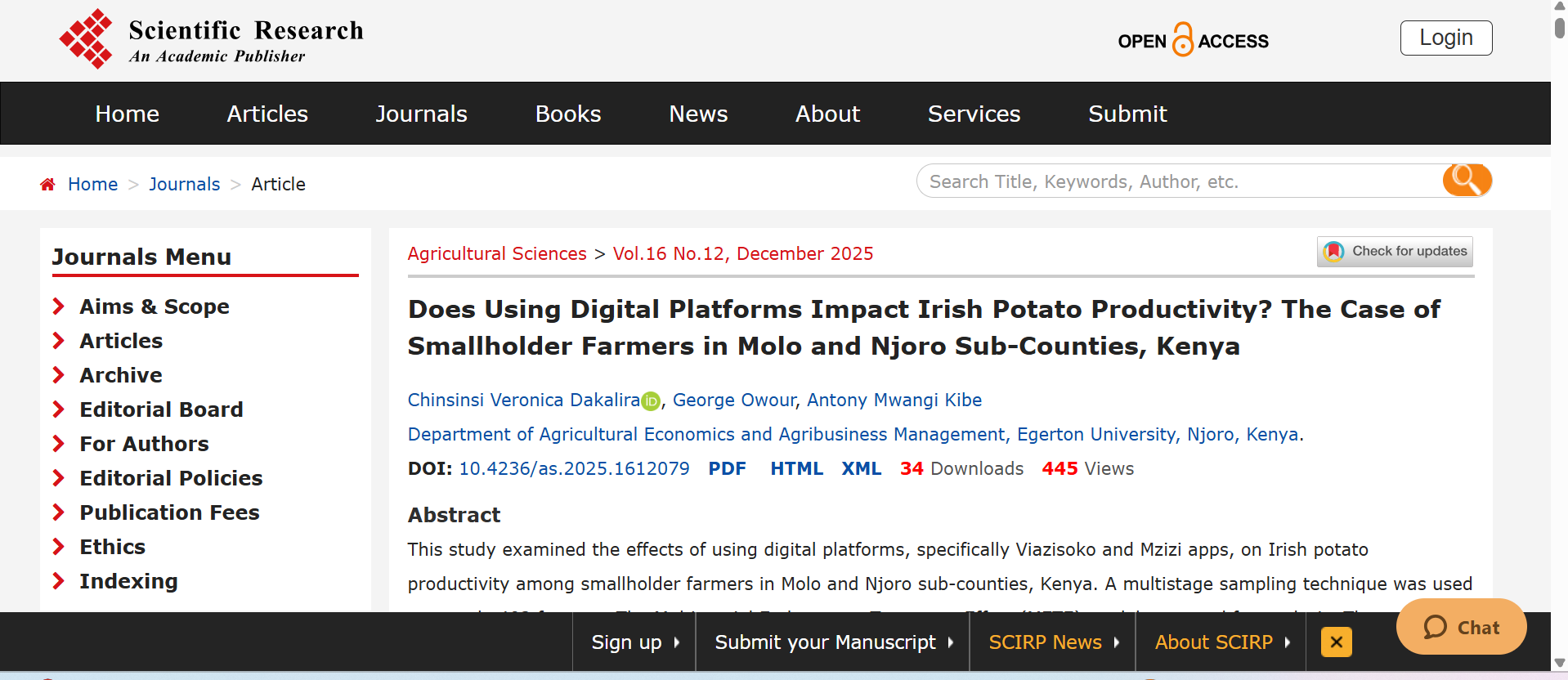
Recent research published in Agricultural Sciences: “Does Using Digital Platforms Impact Irish Potato Productivity? The Case of Smallholder Farmers in Molo and Njoro Sub-Counties, Kenya,” demonstrates that farmers who were aware of digital platforms or actively used them recorded significantly higher productivity compared to those who were unaware. Notably, even awareness alone was associated with improved outcomes, suggesting that knowledge shared through farmer networks and extension services can benefit the broader farming community.

Training and Awareness Key to Adoption
While the benefits are clear, adoption remains relatively low among smallholder farmers. Training and awareness were identified as key factors influencing platform use, alongside access to internet connectivity and smartphones. These findings underscore the importance of strengthening farmer capacity through training and extension support to maximize the returns from digital innovation.