Protecting delicate sprouts during storage and transport is critical for ensuring a full crop stand. Gentle handling and proper planting depth ensure that certified seeds emerge strongly.
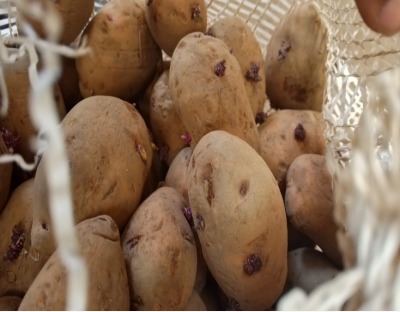
Proper handling of certified potato seeds is essential, as mishandling can drastically reduce germination rates and overall productivity. The most delicate parts are the shoots (sprouts), which must be protected throughout the entire planting process. Seeds should be stored in well-ventilated, diffused light stores (DLS) to ensure they develop strong, short, and firm sprouts; long, weak sprouts are far more likely to break.
During transportation, seed bags must be in good condition and handled with care to prevent bruising. Bags should be clearly labeled with the variety and size category (Size 1 or Size 2) to ensure traceability and uniform planting across different field blocks. When offloading at the field, bags must always be placed gently on the ground; dropping them can cause internal bruising that leads to rotting.
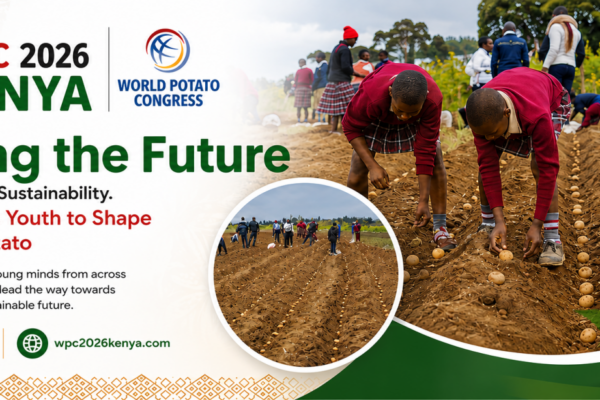
At the point of planting, the physical handling of the sprouted tubers must be extremely gentle. Workers should be trained to pick up each seed and place it in the soil individually to avoid snapping off the sprouts. This is particularly important for both size categories, as they often carry multiple sprouts that are critical for achieving a full and productive crop stand.
Finally, planting should be done at a depth of 10–15 cm in well-prepared, loose soil to allow for easy emergence. Aligning the planting operation with the onset of rains ensures the sprouts have the moisture they need to continue growing immediately. Maintaining field hygiene, using clean tools, and keeping organized records are the final steps in ensuring a successful and productive planting operation.
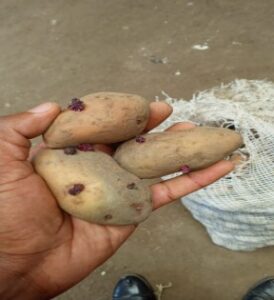
Sprouted seed potatoes ready for planting.
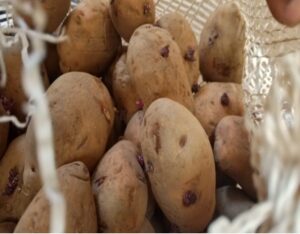
Seed potatoes in a recommended ventilated bag.