Blackleg, also known as soft rot is one of the most significant bacterial threats to potato production in Kenya and worldwide. It is primarily caused by Erwinia species (now reclassified broadly into Pectobacterium and Dickeya spp.). According to the KEPHIS Seed Potato Production and Certification Guidelines, Blackleg is widespread in Kenya and is categorized as a major seed-borne bacterial disease requiring strict management due to its potential to cause significant field and storage losses. It’s seed-borne nature, rapid spread, and destructive effects in both field and storage make it a priority disease for farmers, seed producers, and regulators.
As emphasized in the KEPHIS Seed Potato Production and Certification Guidelines, the cornerstone of Blackleg management is preventive action, through use of clean certified seed, proper crop rotation, good drainage, and field hygiene. When combined, these strategies greatly reduce disease incidence and protect the productivity and profitability of potato farming.
1. Importance of Blackleg in Potato Production
Blackleg is considered a priority disease because:
a) It is seed-borne and rapidly destructive
The bacterium invades plants through the mother seed tuber. Depending on when seed tubers rot, the disease can cause:
• Poor plant emergence,
• Weak stems,
• Significant field and post-harvest losses.
b) High losses in warm and humid regions
Blackleg thrives under warm, moist conditions which are the dominant climate in many Kenyan potato-growing areas resulting in more severe outbreaks.
c) Strict zero-tolerance in seed certification
Under Kenyan seed certification rules, Blackleg has zero tolerance across all seed classes during field inspection. This underscores the disease’s economic and regulatory significance because infected seed lots are automatically rejected.
2. Symptoms and Disease Expression
Blackleg can affect potatoes at any stage:
In the field
• Plants turn yellow while others remain healthy.
• Soft, slimy black spots appear on stems.
• When stems are cut, vascular tissues and pith appear brown or black.
• Stem bases rot, turning black and exuding slime.
• Severe infections lead to wilting and plant death
On tubers
• Infection often begins at the stolon attachment point.
• Black spots spread, causing tuber rotting.
• Unlike bacterial wilt, tubers do not exude white bacterial slime.
• Damaged tubers turn soft, watery, and eventually disintegrate.
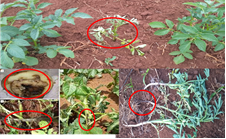
Figure 1. Symptoms of blackleg on potato plants in the field and tubers
3. Sources and Spread of Blackleg
The disease spreads through multiple pathways:
(1) Primary Sources
• Seed potato tubers (main source)
• Infected plant residues
• Contaminated soils and water
(2) Secondary Spread
• Farming tools and machinery
• Poor field hygiene
• Movement through irrigation or surface runoff
The bacterium enters through wounds, lenticels, or damaged tissues. Injuries caused by pests, rough handling, or harvesting significantly increase susceptibility.
Favorable Conditions for Disease Development
Blackleg becomes more severe under:
• High soil moisture or poorly drained fields
• Warm, humid conditions
• Early season tuber rot
• Mechanical damage to tubers during handling
Rotting of mother seed potato tubers before emergence results in poor plant populations.
4. Management and Control Strategies
Effective management of Blackleg requires integrated approaches, especially because there are no curative chemicals for bacterial infections. They include:
a) Use of certified, disease-free seed
This is the most effective preventive measure. KEPHIS mandates zero tolerance for Blackleg in all seed classes.
b) Implement crop rotation
Rotate with non-host crops for 1–7 seasons to reduce bacterial load in soil.
c) Avoid waterlogging
• Do not plant in wet or flooded fields.
• Improve drainage to reduce moisture accumulation.
d) Destroy infected plants
Remove and destroy infected plants through deep burial (6-foot pits) or burning to prevent spread.
e) Minimize physical damage
• Avoid injuring tubers during weeding, hilling, harvesting, transporting, and sorting.
• Chitting (pre-sprouting) helps produce strong sprouts less prone to breakage, reducing entry points for bacteria.
f) Harvest under dry weather
Moist conditions promote bacterial entry and spread during harvest and storage.
g) Maintain strict farm hygiene
• Clean tools, storage facilities, and equipment.
• Prevent movement of contaminated soil from infected to healthy fields.
Why Blackleg Control Must Be Prioritized
• It reduces yield drastically through poor stand establishment and premature plant death.
• Contaminated tubers rot during storage, leading to financial losses for traders and farmers.
• It threatens seed systems because seed lots with Blackleg are not certifiable under Kenyan regulations.
• Climate change, especially increased rainfall and humidity, may worsen disease incidence.