 By Stephen Mungai,
Potato is one of Kenya’s most important food and cash crops, providing income and food security to thousands of farming households. To achieve high-quality yields and reduce post-harvest losses, farmers must follow proper crop management practices throughout the production cycle. One of the most critical but often overlooked practices is dehaulming; the removal of potato vines (haulms) before harvesting. Proper dehaulming improves tuber quality, minimizes disease spread, and enhances the marketability of potatoes.
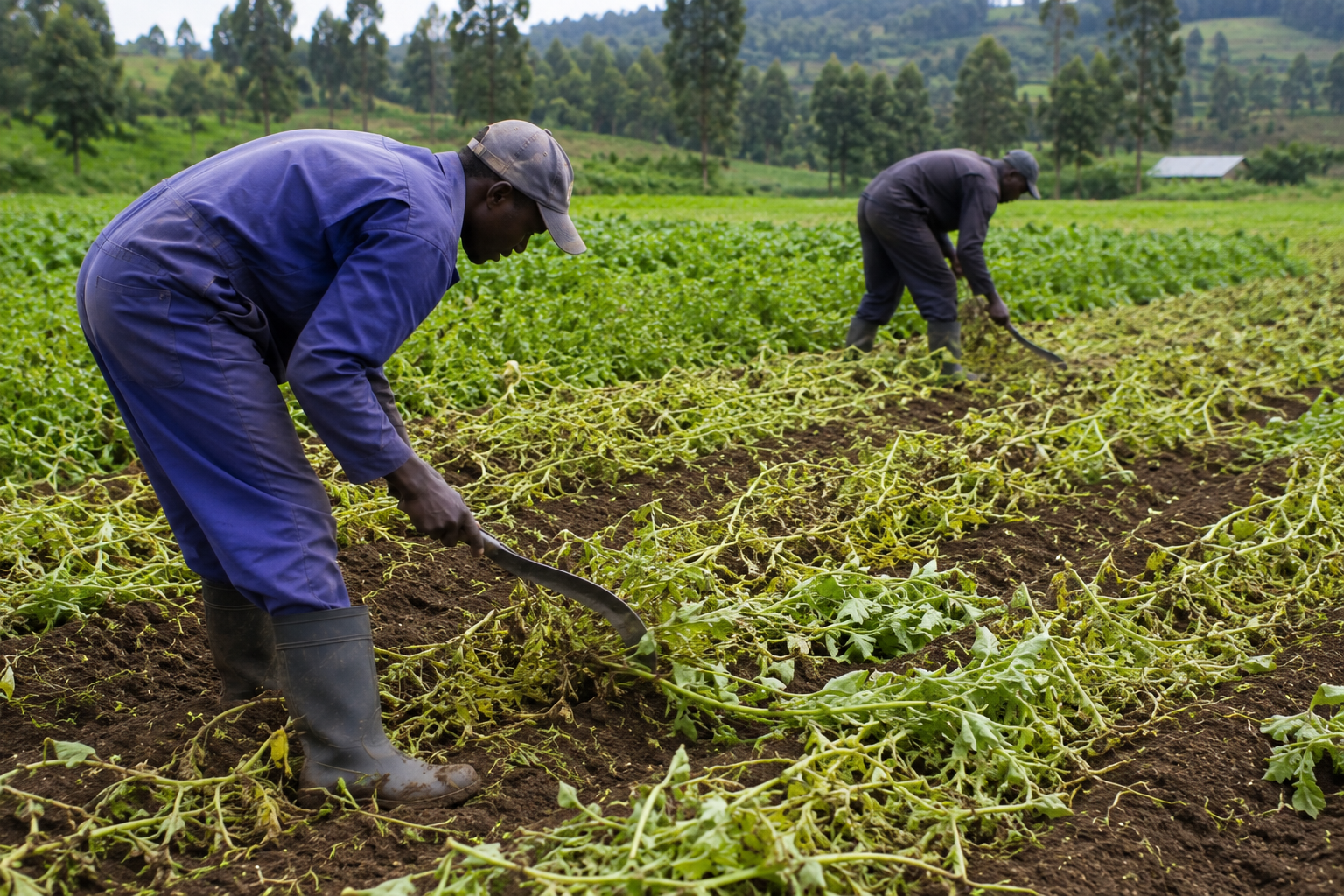
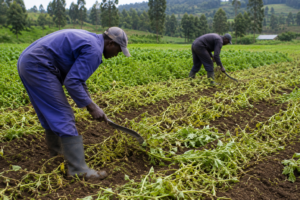
Dehaulming is the process of cutting or destroying the above-ground stems and leaves of the potato plant before the tubers are harvested. This practice allows the potato tubers to complete their maturation underground while the foliage dries off. In Kenya, dehaulming is commonly carried out manually using a panga, slashers, or sickles. On large commercial farms, mechanical haulm toppers or flail mowers may be used to remove the vines efficiently. In some production systems, approved desiccants may also be used under professional guidance and in compliance with Kenyan pesticide regulations.
The timing of dehaulming is crucial. Under Kenyan growing conditions, potatoes are typically dehaulmed 10 to 14 days before harvesting. The practice should be carried out when the crop has reached physiological maturity, which is indicated by the natural yellowing and drying of the lower leaves, the desired tuber size having been achieved, and cessation of active tuber bulking. Farmers growing potatoes for seed production may dehaulm slightly earlier to control tuber size and reduce the risk of virus transmission by aphids. However, premature dehaulming before the crop has matured should be avoided because it results in smaller tubers and lower yields.
One of the primary reasons for dehaulming is to allow the potato skin to harden, a process known as skin set. Immediately after tuber growth stops, the skin remains delicate and can easily peel off during harvesting and handling. Allowing 10–14 days between dehaulming and harvesting enables the skin to become firm and resistant to damage. Tubers with well-set skins experience fewer bruises and wounds during harvesting, making them more suitable for storage, transportation, and marketing.
Dehaulming also plays an important role in disease management. Potato late blight, caused by Phytophthora infestans, is one of the most destructive diseases affecting potato production in Kenya. If infected vines remain attached until harvest, spores can be washed into the soil during rainfall or irrigation, infecting the tubers and causing storage rots. Removing the foliage before harvest reduces the movement of the pathogen from the leaves to the tubers, resulting in healthier produce with a longer storage life.
Another benefit of dehaulming is improved harvesting efficiency. Once the vines have dried, harvesting becomes easier because the bulky foliage no longer interferes with digging operations. This reduces the chances of tubers being cut or damaged by harvesting tools. Uniform vine removal also promotes even tuber maturity, making it easier to harvest the entire crop at once.
For farmers producing certified seed potatoes, dehaulming is a valuable practice for reducing the spread of viral diseases. Aphids, which transmit viruses such as Potato Virus Y (PVY) and Potato Leafroll Virus (PLRV), feed on green potato foliage. Removing the haulms stops further virus transmission to the developing tubers, thereby improving seed quality and ensuring healthy planting material for subsequent seasons.
After dehaulming, farmers should avoid harvesting immediately. Waiting for the recommended 10–14 days allows skins to set properly and ensures tubers have reached optimum quality. Harvesting should preferably be done during dry weather to minimize soil sticking to tubers and reduce the incidence of rots. Farmers should also handle harvested potatoes carefully to avoid bruising and should sort out damaged or diseased tubers before storage.
In conclusion, dehaulming is a simple but highly beneficial management practice that significantly improves potato quality and profitability. By carrying out dehaulming at the right time, about two weeks before harvest and using appropriate methods, Kenyan farmers can reduce disease incidence, improve skin quality, ease harvesting, and enhance the storage and market value of their potatoes. Incorporating this practice into routine potato production contributes to higher returns and a more sustainable potato value chain in Kenya